2026 Solar Connectivity Systems for Remote Communities
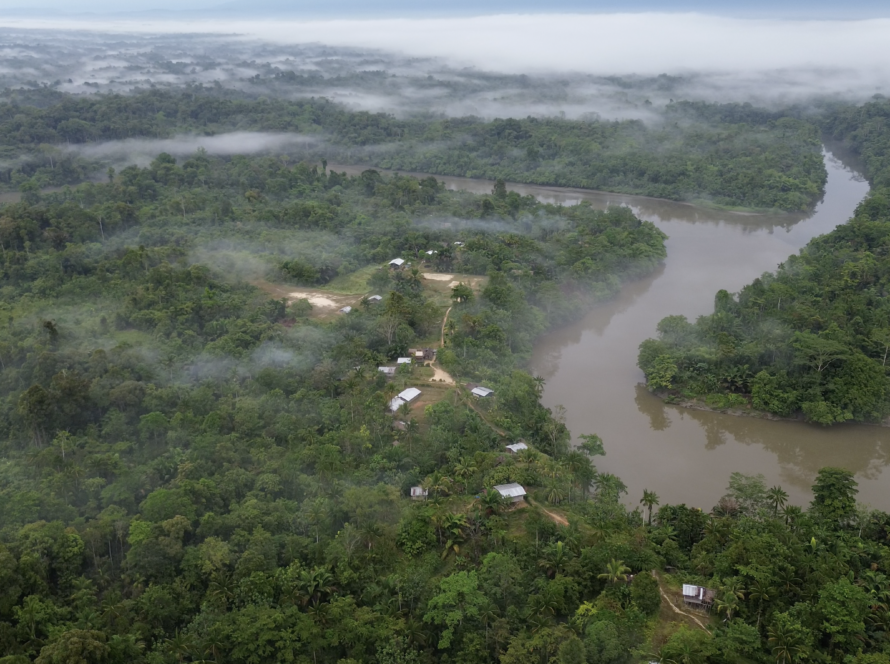
In the remote hamlets of Papua New Guinea and isolated regions of the world, progress has long been stalled by two major hurdles: the lack of reliable electricity and the absence of internet connectivity. For communities living off the grid, waiting for a traditional cell tower or a state-run power extension can take decades and cost hundreds of thousands of dollars.
At the Collective Empowerment Foundation (CEF), we don’t believe in waiting. As part of our 2026 infrastructure rollout, we are deploying a standardized, “plug-and-play” solution that brings power and the world-wide web to the most isolated regions in days, not decades.
The Setup: Why It Works
Our 2026 spec system is built on a partnership of world-class technology: EcoFlow portable power stations and Starlink satellite internet.
While earlier versions of our hubs provided 4.1 kWh of storage, our upgraded 2026 configuration features the EcoFlow DELTA 2 Max paired with two Extra Batteries. This setup provides a massive 6.1 kWh of usable storage.
Why this is a game-changer:
- Weather Resilience: With 6.1 kWh of LiFePO₄ battery capacity, the station can store enough energy during sunny periods to maintain service continuity even during the heavy rains common in tropical PNG.
- Rapid Deployment: Unlike a traditional cell tower, which can cost USD $200,000 and take months to build, a CEF station costs approximately USD $4,100 and can be transported by a small boat or trekking team and set up in under an hour.
- Zero Noise, Zero Fuel: Traditional remote power usually relies on diesel generators, which are loud, polluting, and require a constant, expensive supply of fuel. Our stations are 100% solar-powered, using 800W of portable panels to harvest energy from the sun.
Engineered for the Long Haul: A Decades-Long Solution
One of the most “awesome” features of this system is its longevity. We didn’t just pick any battery; the DELTA 2 Max uses LiFePO₄ (Lithium Iron Phosphate) chemistry. This is designed to last for roughly 3,000 cycles—about 10 years of daily use—before the capacity even drops to 80%.
But the brilliance of the system lies in its modular sustainability. Because the setup uses “Extra Batteries” (EBs) that simply plug into the main unit, the system never truly “dies.”
- Seamless Replacements: In 10 or 15 years, when the original batteries eventually reach the end of their life, the community doesn’t need to replace the entire expensive station. They can simply swap out the individual batteries.
- Scalability: If a community grows, we don’t need to rebuild. We can simply plug in more storage capacity to meet the rising demand for power.
How It Transforms a Community
A single CEF Connectivity Station comfortably supports a hamlet of 200–300 people. We focus on “essential use” to ensure the system remains stable and serves the whole community:
- Education: Students gain access to global learning resources, digital textbooks, and remote tutoring.
- Health: Local health workers can use the hub to coordinate emergency medivacs via Starlink and consult with doctors in city hospitals.
- Economy: Farmers and fishers can check market prices in real-time, reducing the “distance tax” and ensuring they get a fair price for their goods.
- Connectivity: A rostered system allows community members to charge phones and torches, keeping families connected across the mountains and rivers.
By bypassing the need for massive, static towers and moving toward portable, modular power, CEF is proving that you don’t need a billion-dollar grid to bring a village into the digital age.
Interested in sponsoring a station? Our 2026 Solar Connectivity Systems are available as part of our Targeted Programs for both the public and private sectors. To see the full technical specs and performance data of our 2026 hubs, visit our Development Projects page or contact our technical team today.