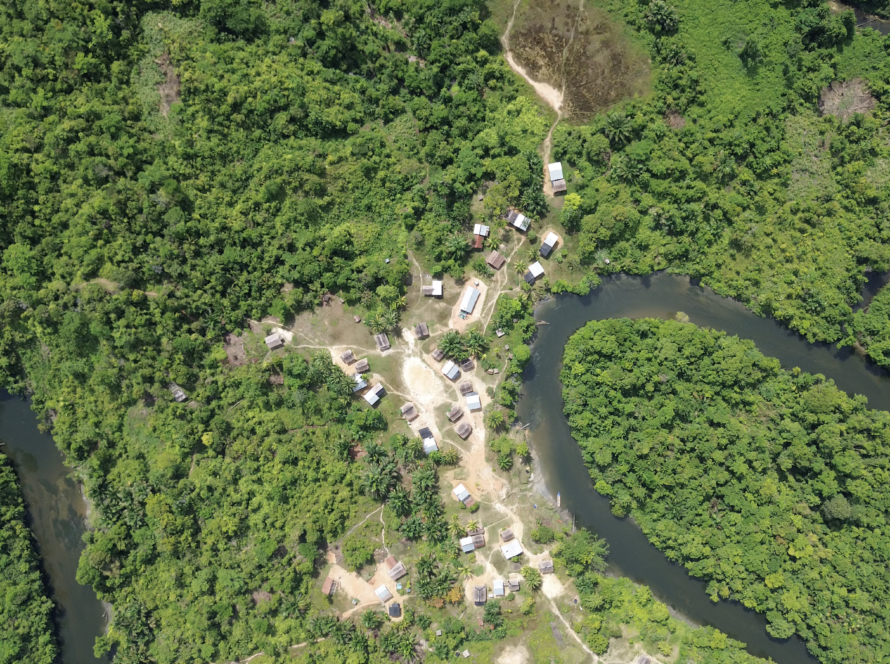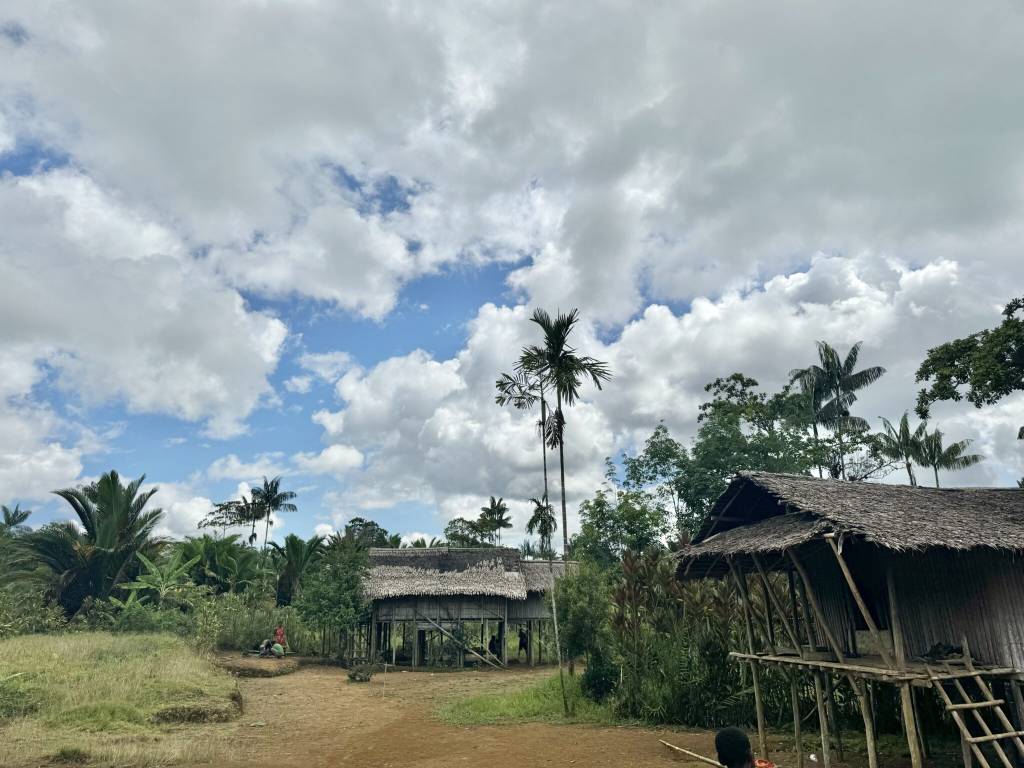
Deep within the North Fly District of Western Province, at the coordinates 5.75884° S, 141.71311° E, lies Hupen Village. Situated on a remote tributary branching off the mighty Fly River, Hupen is a community defined by its extreme isolation. Reaching it requires a grueling 12-hour journey by motorized boat from the nearest township—a distance that has historically kept the village beyond the reach of traditional aid and government services.
In July 2024, the Collective Empowerment Foundation (CEF) in partnership with the North Fly district government, sent a convoy mission to Hupen that exemplifies our multifaceted approach to capacity building. This wasn’t a mission of temporary relief; it was a deployment of foundational infrastructure and specialized training designed to empower the community to drive its own development.
A Multifaceted Approach to Capacity Building
To address the layered challenges of life in the “Last Mile,” CEF deployed a strategic suite of technologies and tools aimed at immediate and long-term empowerment.
1. Reliable Power & Global Connectivity For the first time in history, Hupen was connected to the digital world. We installed a Solar Power System paired with Satellite Internet.
- The Impact: This hub provides the village with a consistent source of electricity for lighting and device charging, while the internet connection allows local leaders to coordinate with health authorities and provides the community with the ability to connect with the outside world.
2. Water Capacitation through Household Clean Water Systems A cornerstone of our health intervention in Hupen was the introduction of household-level clean water systems. Recognizing that river-sourced water is a primary vector for illness, we provided medical-grade filtration units to each household within the community.
- Point-of-Use Filtration: Rather than relying on large, difficult-to-maintain central plants, we equipped households with individual, replaceable filtration systems. These 0.1-micron absolute hollow fiber membranes physically remove 99.99999% of bacteria and 99.9999% of protozoa.
- Capacitation and Training: Our team conducted hands-on training with the villagers to ensure they are the masters of their own water security. We taught the “back-washing” technique, which uses a simple pressure-flush to clean the filters and how to replace the filters using the replacement units we provided. This means the community can maintain high-quality water standards for decades without needing expensive replacement parts or external technical support.
3. Enhancing Agricultural Agency: To strengthen local food security and support greater economic independence, CEF, under the guidance of the local district administration, provided the community with seeds and agricultural tools. In response to significant nutrient deficiencies commonly faced in remote communities, we supplied iron-rich bean seeds alongside a range of other crop seeds to help improve local nutrition outcomes. The tools provided also enable the community to manage their land more effectively by clearing space for more organized farming and reducing the level of manual labour required for subsistence living. Over time, the goal is for this community to distribute these seeds through existing local trade networks so that improved nutrition can extend across other remote communities as well.
4. Health and Maternal Safety Foundations Beyond immediate supplies of critical medicine, first aid training, STD education and clothing provision, the mission served as a critical fact-finding operation for maternal health. CEF conducted a feasibility study and officially received requests from local women for a Safe Birthing Facility. This data is now being used to design a targeted program to reduce the high maternal risks associated with giving birth in such an isolated region.
Lessons from the Frontier
The Hupen 2024 Development Project served as a vital learning ground for CEF’s operational model. Our General Learning Report captured several key takeaways that now inform our work across Papua New Guinea:
- Access is Possible: We proved that high-impact infrastructure can be deployed to even the most inaccessible riverine communities through rigorous logistical planning.
- Community Co-Design: The mission’s success was rooted in active participation. By visiting the community before hand to gain feedback on the project, having the community elect representatives to maintain the infrastructure and having local stakeholders within the decision making process, we ensured that the infrastructure met the organic priorities of the villagers themselves.
- Sustainability: By using durable filtration hardware and LiFePO₄ battery technology, we provided systems designed for long-term service, not just a few months.
The Road Ahead
Hupen is now connected with the broader region, the 2024 project has established a permanent base for communication, power, and clean water that CEF will continue to monitor. We are already planning return missions to evaluate the infrastructure and move forward with the community’s request for a safe birthing pilot.
Hupen 2024 is the blueprint for how CEF empowers the remote: through multifaceted infrastructure, ethical engagement, and a refusal to let distance be a barrier to progress.
To learn about about our work visit our Development Projects page or contact our field operations team.