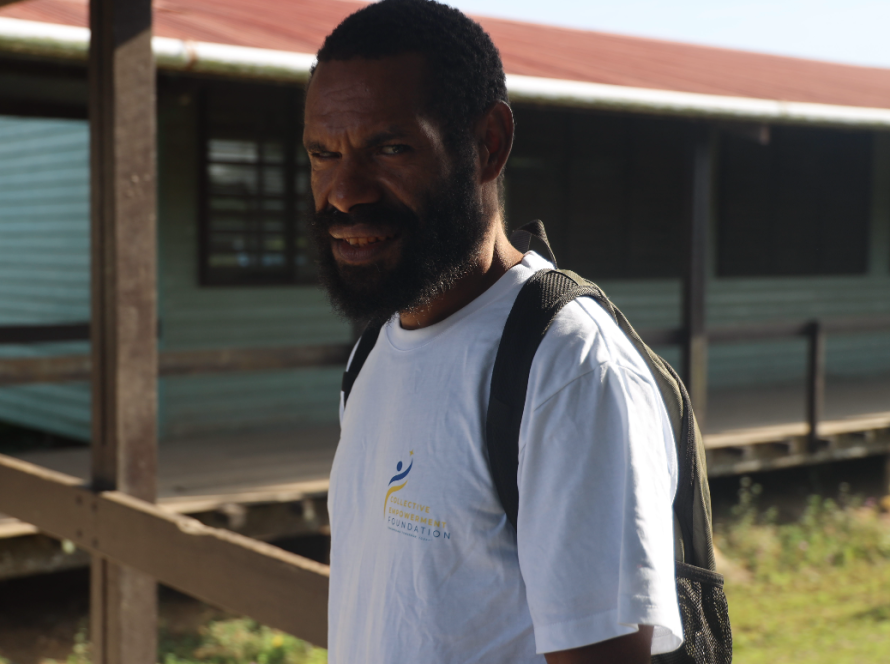
For generations, cacao has been the heartbeat of rural Bougainville. It is more than just a commodity; it is a primary vehicle for household income and a cornerstone of the region’s “Green” economic potential. However, despite its importance, the sector has long been shrouded in data scarcity.
As part of our research supporting the implementation of the Bougainville Green-Blue Economic Policy (GBEP), the Collective Empowerment Foundation (CEF) went deep into the cacao-growing hub of Kunua to understand what is truly holding back this “Golden Bean”. Our findings reveal a sector ripe with opportunity but tethered by specific structural constraints.
The “Distance Tax” on Cacao Farmers
The most significant hurdle identified in the Kunua pilot site is the cost of logistics. Our data shows that for a cacao farmer in a remote community, 50% of their total cost of production is consumed by transport alone.
This “distance tax” means that even when global cacao prices are high, the local farmer sees only a fraction of that value. This is compounded by poor road infrastructure and the “middleman” effect—where farmers, unable to transport their own bags to Buka, are forced to sell at lower prices to local aggregators who have the means to move the product.
The Quality Gap: Why Training Matters
Our research highlighted a dramatic disparity in earnings based on access to technical knowledge. In the Kunua region, farmers who had participated in practical training programs saw an average increase of PGK 820 per harvest compared to those who had not.
This isn’t just about growing more pods; it’s about the science of fermentation and drying. High-quality, “A-grade” cacao requires precise handling. Without intermittent training and modern drying infrastructure, much of the region’s output remains at “bulk” quality, missing out on the lucrative specialty and “single-origin” chocolate markets that the Green-Blue policy aims to target.
The Looming Threat of Inflation
Economic resilience is currently being tested by a hidden enemy: inflation. Our survey of 150 participants revealed that 58% of community respondents perceive local inflation to be between 20% and 40%.
For a cacao farmer, this means the price of basic tools, fuel, and household goods is rising much faster than the price they receive for their beans. Without access to formal credit or decentralized microfinance—which currently faces barriers due to high travel costs and strict banking requirements—farmers have no “buffer” to invest in their farms during these inflationary periods.
The Road Ahead: Policy-Ready Solutions
To turn these insights into action, CEF’s research (led by experts including Dr. Jeffery Noro and CEF’s Mazzo Bineng and Alessandro Prestia) has identified key “implementation nodes” for the Bougainville Government:
- First-Mile Aggregation Hubs: Establishing community-managed collection points with proper fermentation and drying facilities to reduce individual transport costs and ensure quality control.
- Decentralized Finance: Bypassing traditional banking hurdles by supporting agent-based microfinance that reaches the village level, allowing farmers to invest in sustainable farming practices.
- Conservation Linking: Strengthening the link between cacao and forest protection, ensuring that the expansion of the cacao sector doesn’t come at the expense of Bougainville’s primary forests—a core pillar of the GBEP.
Our Role as a Knowledge Partner
This research is a prime example of how CEF operates as a social enterprise. We provide the research & consultancy that allows governments and private partners to make evidence-based decisions. By understanding the cacao sector’s constraints today, we can help build a more prosperous and sustainable Bougainville for tomorrow.
If you are interesting in contracting CEF to conduct research & consultancy contact us to find out more.
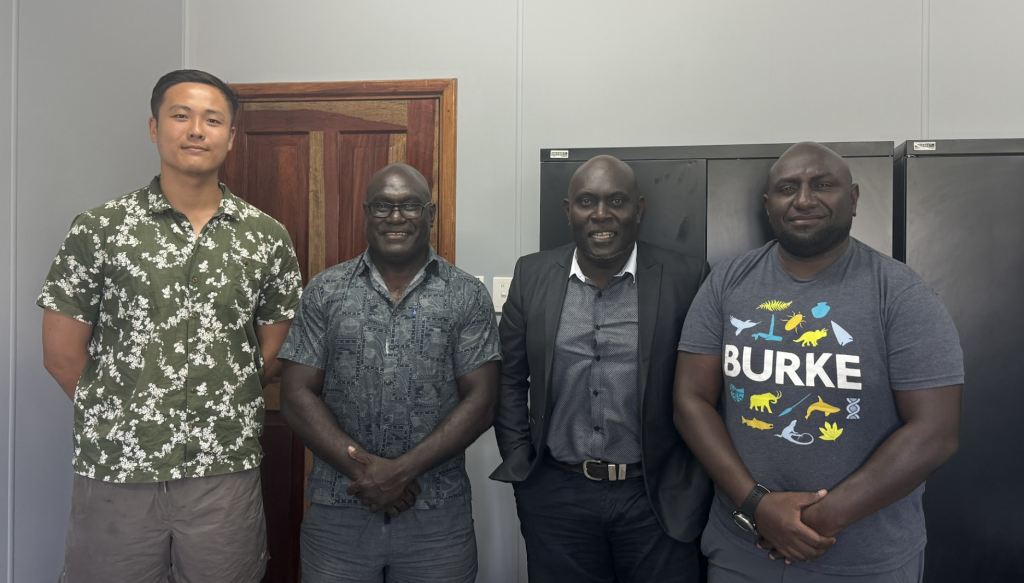
PICTURE (left to right): Kai Hang (CEF Co-Founder & CEO), Dr Jeffery Noro (CEF Director), Kenneth Nanei (Bougainville Chief Secretary), Dr Novera